How Physical Activity Improves Mental Health
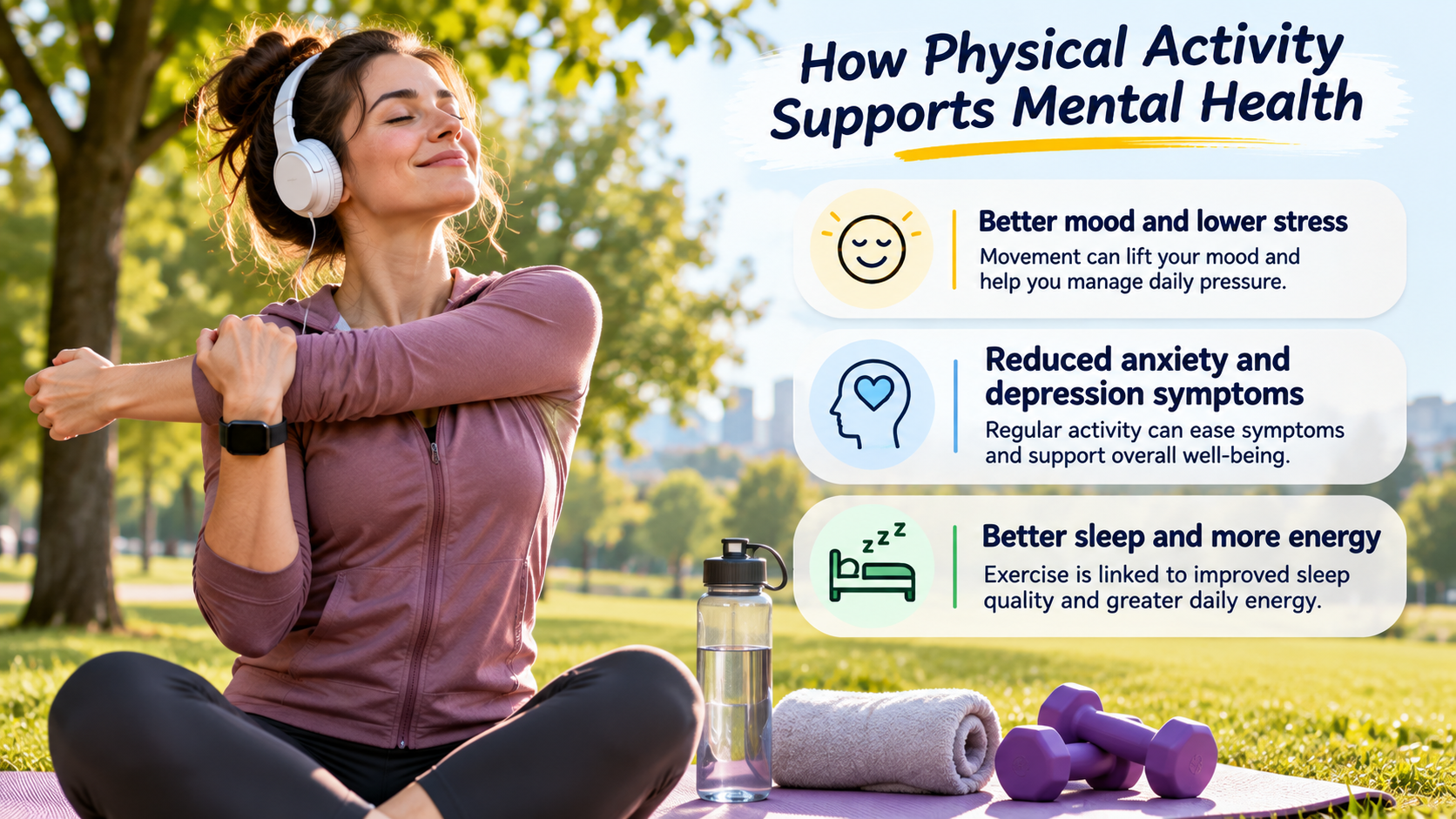
Regular movement can support mental well-being in several ways. Research links physical activity with lower short-term anxiety, better sleep, improved mood, and a lower risk of depression over time. Understanding the effects of physical activity on mental health also means keeping expectations realistic: exercise can be a useful part of self-care and treatment, but it does not replace professional support when that is needed.
The Effects of Physical Activity on Mental Health
What research shows about mood and stress
The CDC reports that even a single session of moderate-to-vigorous activity can reduce short-term feelings of anxiety, while regular activity is associated with better sleep and a lower risk of depression. WHO also notes that regular movement can reduce symptoms of depression and anxiety and support overall well-being.
Research reviews suggest that the relationship is not identical for everyone or every type of activity. Benefits can depend on health, intensity, consistency, personal preference, and whether the activity is enjoyable and sustainable.
What exercise can and cannot do
Exercise can support mood, sleep, stress management, and daily functioning. It may also be used alongside therapy, medication, or other care when a clinician recommends those approaches.
It should not be treated as a guaranteed cure. Persistent sadness, panic, thoughts of self-harm, severe sleep problems, or symptoms that interfere with daily life deserve professional attention.
3 Ways Physical Activity Can Benefit Mental Health
The following 3 ways physical activity can benefit mental health summarize effects that are supported by public-health guidance and research reviews.
1. Better mood and lower stress
Walking, cycling, swimming, dancing, strength training, and recreational sports all provide opportunities to move attention away from daily pressure. A single bout of moderate-to-vigorous activity may reduce short-term anxiety, and regular exercise is associated with better mood for many people.
2. Reduced anxiety and depression symptoms
WHO reports that physical activity can reduce symptoms of depression and anxiety. Reviews also support exercise as a useful adjunct for some people with these conditions. The size of the benefit varies, so movement should be viewed as one supportive tool rather than a substitute for diagnosis or treatment.
3. Better sleep and more energy
Regular activity is associated with improved sleep quality, according to the CDC. Better sleep can make it easier to concentrate, manage routines, and feel more capable during the day. Exercise timing and intensity may affect people differently, so a routine that feels sustainable is more useful than forcing an exhausting schedule.
How to Start: How Much and What Type
For general health, the CDC recommends that adults get at least 150 minutes of moderate-intensity aerobic activity each week, or 75 minutes of vigorous activity, or an equivalent combination. Adults should also do muscle-strengthening activity on at least two days per week. WHO guidance is similar and notes that some activity is better than none.
Simple ways to build a routine
Start with an amount you can repeat. A brisk walk, short bike ride, beginner strength session, swim, or active recreation can all count when the intensity is appropriate.
A practical approach is to:
- choose one or two activities you actually enjoy;
- schedule short sessions on realistic days;
- increase time or intensity gradually;
- include rest when you need it;
- adjust the plan if pain, illness, or unusual fatigue occurs.
People with chronic conditions, injuries, pregnancy-related concerns, or long periods of inactivity may benefit from asking a health professional what level of activity is appropriate before making major changes.
FAQ: Physical Activity and Mental Health
How much exercise do I need to feel a mental health benefit?
There is no single threshold that guarantees a mental-health effect. Some benefits, including reduced short-term anxiety, can occur after one moderate-to-vigorous session, while broader health guidance for adults recommends regular weekly activity.
Can exercise replace therapy or medication?
No. Exercise can complement professional care, but it should not replace therapy, medication, or another treatment plan when those are needed. Talk with a qualified clinician before changing prescribed care.
What type of activity is best for stress?
There is no universally best option. Walking, cycling, swimming, strength work, yoga, recreational sports, or other enjoyable movement can be reasonable choices if they fit your health and preferences.
Physical activity supports mental well-being, but it is not emergency or specialist care. If symptoms are severe, worsening, or include thoughts of self-harm, seek help from a doctor, mental-health professional, or emergency service.